
Roger Küng
Head of Operations EnergyCuringRAHN AG

UV/EB curing is already recognised as a green technology and RAHN is proud in promoting UV/EB curing for over 30 years. Compared with conventional curing technologies, significant CO2 savings can be made and thus reducing greenhouse gas emissions and decreases our carbon footprint.
EB/UV curing does not need large ovens, often burning methane gas, does not have solvent emissions that require further processing or burning and requires a smaller physical footprint to dry ( actually, to cure). EB/UV coatings tend to be classed as 100 % solids, so the film weight you apply is the one that remains. This means you need less ink or coating compared to conventional systems and there is no excess solvent or water being transported around the globe.
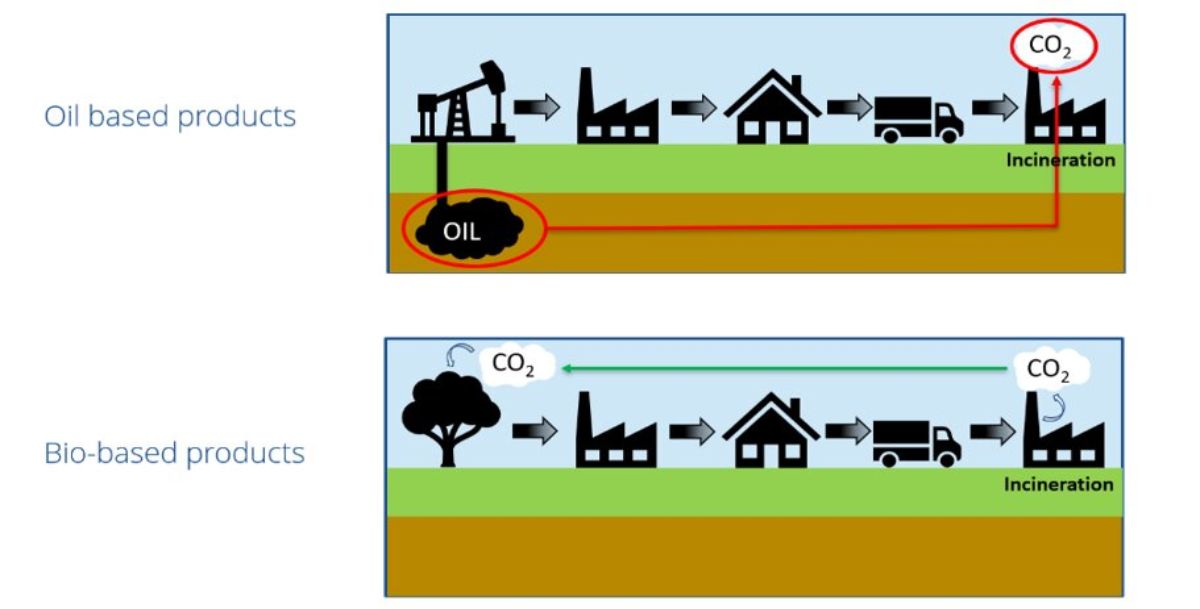
Bio-based materials can have an improved environmental profile. In using them, one can contribute to a low carbon economy because as they grow, they take up CO2 (Figure 1). Whilst at the end of life this CO2 is released back in to the atmosphere, it is not adding new CO2 as when using oil. In some cases, bio-based products can also give new or superior properties to standard oil-based products.
RAHN AG