
Roger Küng
Head of Operations EnergyCuringRAHN AG

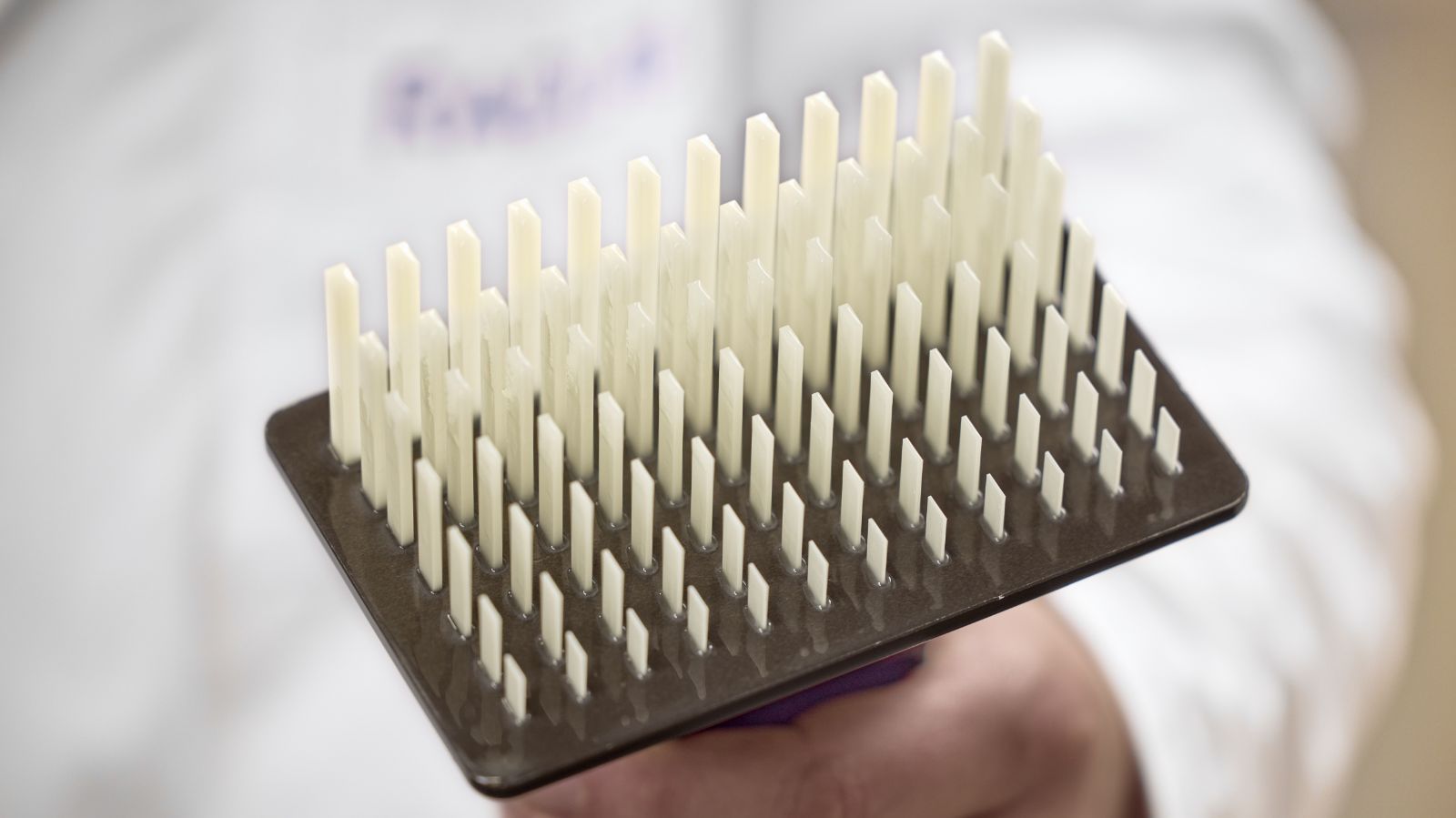
Imagine an aerospace engineer needing to fabricate a heat-resistant component prototype within 24 hours, or a dental technician designing custom crowns with micron-level accuracy. Traditional ceramics? Too slow and rigid. Polymers? Lacking in heat resistance or mechanical integrity. Enter UV-curable ceramic resins: the modern solution that combines ceramic-like strength and thermal properties with the design freedom of 3D printing.
This article is your practical guide to understanding how ceramic 3D printing resins work, what differentiates oxides from non-oxides, how to choose the right resin for your needs, and why RAHN’s custom formulations are trusted across industries.
In this article, you’ll learn:
The photopolymerization of ceramic resins offers a new approach to a traditional craft.
Find out more about ceramic resins, their main properties and applications, and how your business can profit from ceramic resin 3D printing.
| Feature | Traditional Ceramics | Ceramic 3D Resin (UV-Cured) |
| Production Time | Days to weeks | Hours |
| Resolution | Medium | Very high (fine detail) |
| Thermal Resistance | High | Customizable, High |
| Cost Efficiency (Low-Volume) | Low | High |
| Design Flexibility | Low | Very high |
Find out more about ceramic resins, their main properties and applications, and how your business can profit from ceramic resin 3D printing.
UV-curable ceramic resins are a type of UV curable resin for 3D printing that cures (hardens) when exposed to ultraviolet (UV) light. These resins are considered a composite material, which usually entails monomers, oligomers, photoinitiators as well as additives. When exposed to UV light, the photoinitiators undergo a process called photopolymerization, which causes the monomers and oligomers to cross-link and form a solid, ceramic-like material.
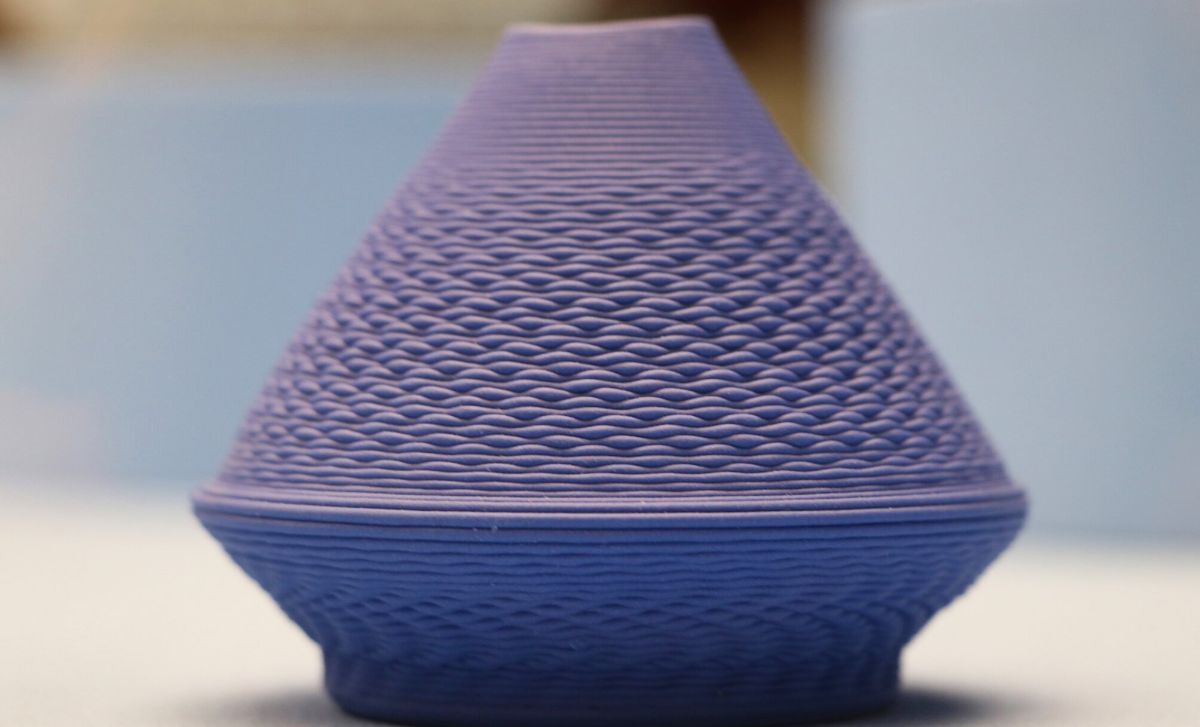
The outcome presents a unique, uniform matt finish that offers a ceramic look and feel. This adds a refined touch to any 3D printed piece, distinguishing it from those made from other materials.
UV-curable ceramic resins offer several advantages over traditional ceramic materials and other types of resins. They cure rapidly when exposed to UV light, allowing for faster production processes. UV curing enables precise control over the entire process, resulting in high-resolution prints with intricate details.
Ceramic resins can be customised to achieve specific material properties such as strength, hardness, and thermal stability. Applications of UV-curable ceramic resins include heat-resistant applications, decorative items, prototypes, dental industry, automotive, aerospace and medical applications.
Ceramic resins are increasingly used in industrial 3D printing where standard polymers lack thermal or mechanical performance and traditional ceramic manufacturing is too slow or inflexible. Ceramic resin 3D printing combines ceramic-like stiffness, heat resistance and electrical insulation with the speed and design freedom of additive manufacturing.
Compared to conventional ceramic forming methods, ceramic resins enable much faster prototyping and development cycles.
Complex geometries, internal channels and fine details can be produced without tooling constraints, making ceramic resins ideal for low-volume, high-performance industrial applications.
In addition, ceramic resins offer tunable material properties through formulation. Parameters such as ceramic loading, viscosity, thermal resistance and burnout behaviour can be adjusted to meet specific application requirements.
When it comes to ceramic resins, there are two main distinguishable groups: oxides and non-oxides.
Oxide ceramic resins contain ceramic particles composed primarily of metal oxides, such as alumina (Al2O3), zirconia (ZrO2), or silica (SiO2). Oxide ceramic resins are known for their excellent mechanical properties, including high strength, hardness, thermal stability and the ability to withstand oxidation. They are commonly used in applications requiring robust and durable ceramic materials, such as aerospace components, automotive parts, and cutting tools.
Non-oxide ceramic resins, on the other hand, contain ceramic particles composed of non-metallic elements, such as carbides, nitrides, and borides. Examples of non-oxide ceramic materials include silicon carbide (SiC), silicon nitride (Si3N4), and boron carbide (B4C). Non-oxide ceramic resins offer advantages such as high hardness, wear resistance, and excellent chemical stability. They usually perform better in extreme environments and show a high level of corrosion resistance, hardness, and oxidation resistance.
Ceramic resin 3D printing is becoming more popular due to the valuable properties, ranging from high stiffness, thermal resistance as well as a distinct look and feel of the final product.
Ceramic resins are characterised by their exceptional stiffness, offering superior resistance to deformation and bending. This high stiffness makes them highly desirable for various industrial applications, where stability and durability are critical requirements, including aerospace, automotive, electronics as well as medical devices.
Depending on the specific formulation and application requirements, ceramics can withstand very high temperature. For instance, silicon carbide and silicon nitride are commonly used ceramics that can withstand temperatures of up to 2400 degrees Celsius, making them the ideal choice in extreme thermal environments.
Ceramic resins offer superior electrical insulation due to their non-conductive nature, effectively preventing the flow of electricity. This property makes them valuable in electrical and electronic components, such as circuit boards, insulators and encapsulation materials, where maintaining electrical integrity and safety is paramount for reliable operation.
Ceramic resins have a distinct look and feel characterised by their smooth surface finish and tactile quality. Their appearance often mimics that of traditional ceramics, with the added benefit of being customizable in terms of colour, texture and surface details, offering unique aesthetic possibilities in various applications.
One of the underappreciated benefits of ceramic resin 3D printing is its role in reducing waste and promoting sustainable manufacturing. Traditional ceramic forming often leads to significant material losses due to breakage or overproduction. In contrast, additive manufacturing with ceramic resins only uses as much material as necessary for the part, drastically minimizing waste.
Ceramic resin 3D printing has found diverse applications across several industries due to its ability to produce intricate parts with high precision and customization.
| Property | GENOMER* 1251M | GENOMER* 1280M | GENOMER* 1254M | GENOMER* 1229M | GENOMER* 4230 |
| Ash Content (Post Burnout) | Low | Ash-Free | Low | Low | Low |
| Viscosity | Low | Medium | Medium | Medium | Low |
| Toughness | Moderate | High | High | Moderate | Low |
| Shrinkage | Medium | Low | Medium | Low | Very Low |
| Best For | Ceramic Loading | Structural Use | Strength Builds | Surface Hardness | Dimensional Accuracy |
When choosing a ceramic resin 3D printing method, the key to success lies not only in the technology but in how well it aligns with your resin’s properties. Different methods deliver varying benefits in speed, detail, and compatibility with formulations such as RAHN’s GENOMER line.
| Printing Method | Best Used For | Compatible RAHN Products | Key Benefits |
| Stereolithography (SLA) | Dental, jewelry, small-scale prototyping | GENOMER* 1254M, 1229M | High detail, strong surfaces, fine geometry |
| Digital Light Processing (DPL) | Functional parts, custom dental devices, 3D printing for jewellery | GENOMER* 4230, 1280M | Fast print times, excellent shrinkage control |
| Material Jetting | Decorative items, aesthetic models | GENOMER* 1251M (low viscosity) | Multimaterial, color and texture variations |
Use GENOMER 1251M* where low viscosity is critical. Use GENOMER 4230* when dimensional accuracy is a priority, and GENOMER 1280M* for ash-free sintering and mechanical resilience.
Unlock new possibilities for your products with RAHN’s custom ceramic parts. Our innovative 3D printing solutions empower you to enhance performance, durability and aesthetics of your products. Contact us today to discover how our ceramic resins can add value to your projects.
Yes, ceramic resins are known for their high thermal resistance compared to conventional 3D printing resins. Depending on the ceramic formulation and ceramic content, ceramic resin 3D printed parts can withstand significantly higher temperatures while maintaining dimensional stability and mechanical integrity. This makes ceramic resins suitable for applications exposed to heat, such as tooling, electronics, aerospace and automotive components.
The main difference between ceramic resins and traditional ceramics lies in the manufacturing process. Traditional ceramics are typically formed through casting, pressing or machining, followed by sintering, which can be time-consuming and restrictive in design. Ceramic resin 3D printing uses UV-curable ceramic-filled resins to create parts additively, enabling faster production, greater design freedom and efficient low-volume manufacturing, while still delivering ceramic-like properties.
Yes, one of the key advantages of ceramic resins is their formulation flexibility. Ceramic resin properties such as viscosity, ceramic loading, burnout behaviour, mechanical strength and surface finish can be tailored to specific application requirements. RAHN supports this customisation by providing UV-curable raw materials that enable the development of application-specific ceramic resin formulations for demanding industrial and technical uses.
RAHN AG