
Roger Küng
Head of Operations EnergyCuringRAHN AG

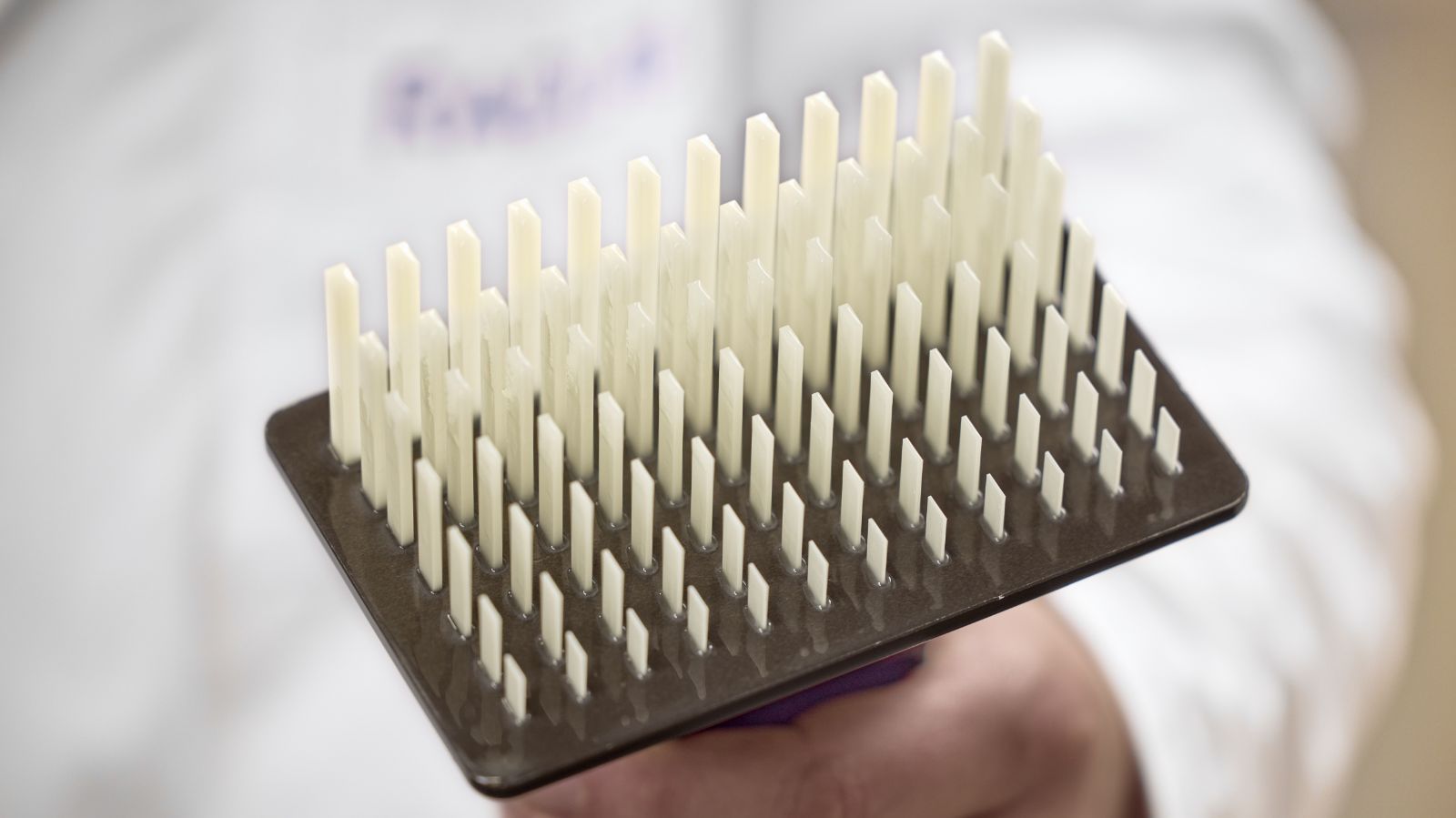
Flexible materials are essential in 3D printing, enabling applications that require movement, cushioning, or adaptability. They are widely used in areas such as footwear, medical devices, seals, flexible joints, and wearables, where softness and elasticity are critical to performance. As 3D printing flexible materials and 3D printing soft materials continue to grow in demand, selecting and processing them correctly becomes increasingly important.
However, working with flexible materials also introduces challenges – printability, post-processing, and durability often complicate production and application. This guide explores how to understand, select, and print flexible materials effectively, helping users balance elasticity with mechanical strength for their specific use cases.
To work effectively with 3D printing flexible material, it's important to understand key mechanical properties: elongation, tear strength, modulus, and tensile strength.
These properties often trade off against one another. For example, materials with very high elongation typically show lower tear strength, while those with higher tear strength tend to be less stretchy.
Finding the right balance between elasticity and durability is essential for achieving reliable, high-performance printed parts that suit their intended function.
A 3D printing material becomes flexible when it features:
In resin-based printing, oligomer and monomer selection directly influences softness and stretchability.
A wide range of material families offer flexible characteristics in 3D printing, each with specific performance profiles tailored to different needs. Below is an overview of the most relevant families and their standout products.
These material families and their respective resins provide a strong foundation for tailoring flexibility in 3D printed parts, depending on the specific application and required mechanical profile.
Demonstration from our RadLab
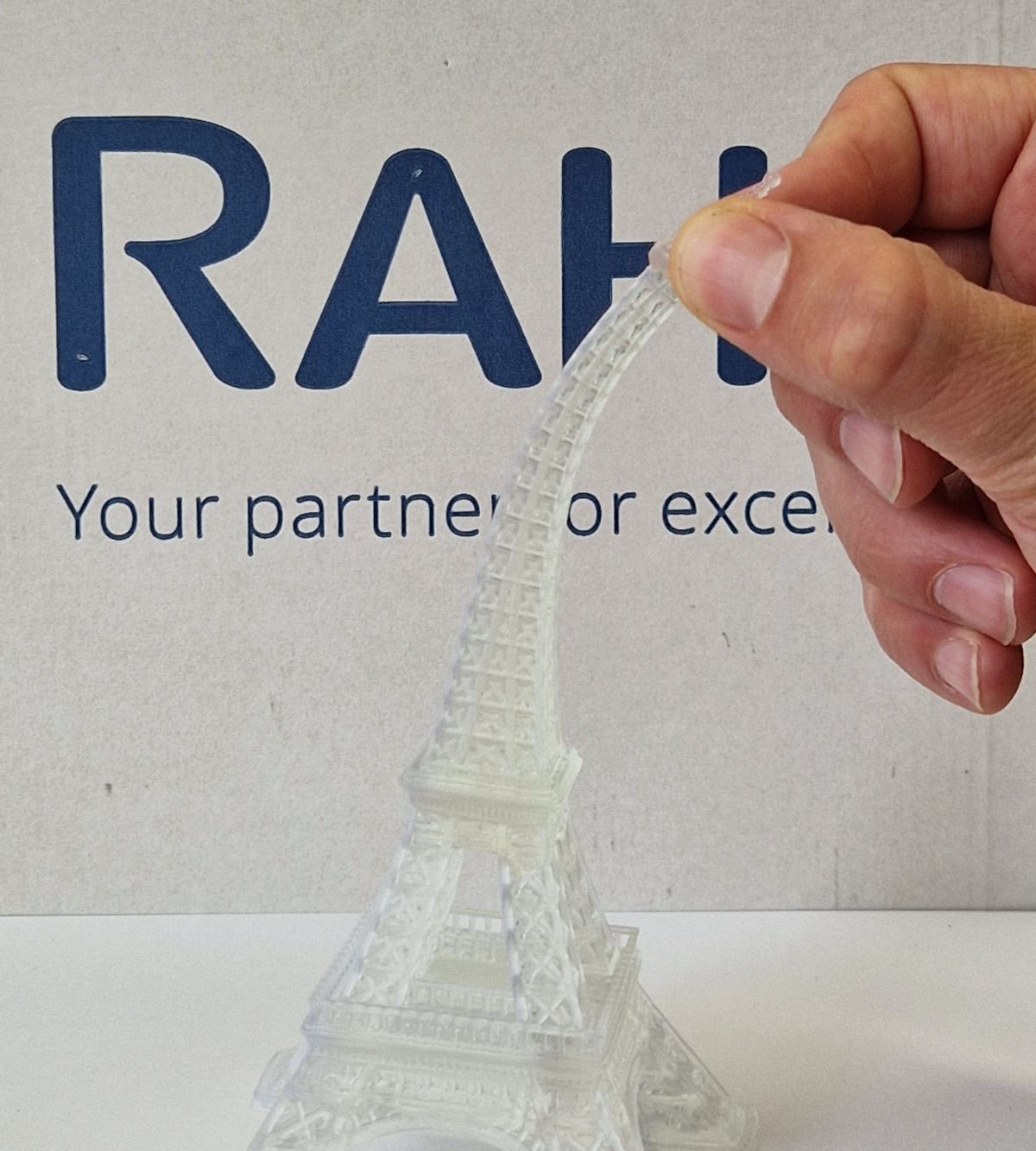
While this guide focuses on resin-based systems such as SLA 3D printing, flexible materials also play a key role across other 3D printing technologies. Users working with 3D printing flexible materials or 3D printing soft materials can choose from a variety of thermoplastic, powder, and photopolymer options depending on their application and equipment.
This comparison helps users understand where different 3D printing flexible materials fit depending on the technology.
Material Jetting technologies produce rubber-like materials with:
Material jetting 3D printing is particularly well-suited for prototyping overmolded components, grips, handles, gaskets, and tactile interfaces
Flexible 3D printing materials can be formulated to emphasize either elasticity or toughness, depending on the performance demands of the end-use application. Here’s a comparison between two representative formulations:
By adjusting the base resin and additives, users can fine-tune formulations to meet specific performance goals, whether they lean toward softness and stretch or robustness and structural integrity.
When selecting flexible materials for 3D printing, it’s important to understand that improving one performance aspect often compromises another. For example, higher elongation, which increases a material’s ability to stretch, typically results in lower stiffness and modulus, meaning the material may deform more easily under load. Similarly, there is often an inverse relationship between elongation and tear resistance: as materials become stretchier, their resistance to tearing can decrease.
Because of these trade-offs, material selection must be closely aligned with the application’s requirements. Below are examples that illustrate how different formulations are optimized for specific use cases:
High elongation, low tear strength:
Balanced properties:
Understanding these performance trade-offs enables users to strategically choose the right material formulation, ensuring that printed parts perform optimally in their intended roles.
Successfully printing with flexible materials requires thoughtful design, optimized print settings, and an awareness of common pitfalls. The following practical guidelines can help improve both print quality and functional performance.
By applying these practices, users can reduce print failures and produce flexible parts that meet both visual and mechanical expectations.
For medical devices and in dental applications, materials must meet strict standards for biocompatibility and flexural strength, especially for devices in prolonged contact with the body. Flexible components often need to conform to soft tissue, absorb stress, and remain non-irritating. Resins like GENOMER* 1280M, GENOMER* 4256, and GENOMER* 4270 provide high elongation and low irritancy, making them well-suited for items such as custom dental trays, soft tissue simulators, and skin-contact wearable devices.
The footwear and fashion industries benefit greatly from soft and form-fitting materials. GENOMER* 3135, with its high elongation and softness, is commonly used in blends to produce various components and wearable accessories that adapt to body movement and shape. When compared to traditional TPU or PEBA-based materials, GENOMER* 3135 blends offer similar comfort and flexibility while enabling finer customization and lower environmental impact due to its bio-renewable content.
In industrial and mechanical applications, flexibility must often be paired with durability, chemical resistance, and mechanical strength. For snap fits and flexible joints, materials like GENOMER* 4212 and GENOMER* 1280M serve as effective flexibilizers, offering good rebound, low viscosity, and minimal yellowing – important for visual and functional longevity. In addition, custom seals and vibration dampers can be formulated using these resins for optimized performance in demanding environments.
These diverse use cases highlight the versatility and importance of flexible materials in addressing real-world challenges across industries.
The landscape of flexible materials in 3D printing continues to evolve, driven by sustainability goals, performance demands, and advances in chemical engineering.
One major trend is the shift toward bio-based oligomers, such as GENOMER* 3135, which combines high elongation, low viscosity and softness with renewable content. These materials address growing environmental concerns without compromising on functional performance, making them increasingly attractive for consumer and industrial applications alike.
Another key direction is the development of custom formulations that achieve hybrid properties – for example, combining flexibility with impact resistance or integrating elastomeric behavior with structural strength.
This enables materials to be tailored more precisely to specific use cases, expanding design possibilities and reducing the need for multi-material assemblies.
Lastly, innovations in photoinitiator chemistry are enabling deeper and more uniform curing, which improves both elasticity and durability. These advances ensure that even complex, thick, or intricate geometries cure thoroughly, resulting in more reliable and consistent mechanical properties across the entire part.
Together, these trends point toward a future where flexible 3D printing materials are more sustainable, customizable, and performance-optimized than ever before.
Flexible materials unlock a wide range of possibilities in 3D printing, but they require careful consideration of mechanical properties like elongation, tear strength, modulus, and tensile strength. Each application demands a different balance of these factors.
Choosing the right material family and formulation, whether for elasticity, toughness, or durability, is key. A strategic approach, aligning performance metrics with end-use requirements, ensures that printed parts meet both functional and production needs effectively.
RAHN AG