Product Guide Product Finder

RAHN – Your Specialty Chemical Supplier

Worldwide support for your energy curing systems. RAHN is a premier worldwide supplier of additives (stabilizers), oligomers (urethane acrylates), photoinitiators, oligoamines, monomers such as di-, tri- and poly- functional diluents (Miramer) and other customized specialty resins and chemicals. Our products are used in ultraviolet, LED and electron beam cure technologies and are essential components of high performance inks, coatings, adhesives, medical, rapid prototyping and other applications.

Our latest news

  • G4270_draft-Front_image_rk.jpg

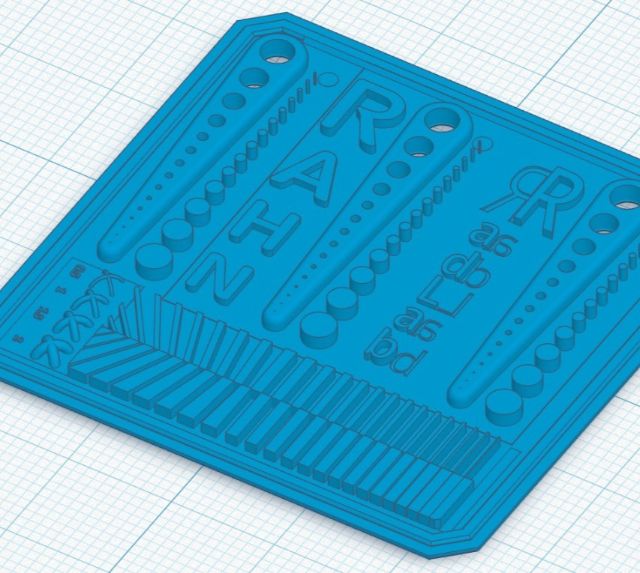
    Webinar on October 28th: High-Toughness 3D Printing Resins with GENOMER* 4270

    29.09.2026

    Learn how you can enhance impact resistance and elongation while preserving the print fidelity your application demands.

    Webinar on October 28th: High-Toughness 3D Printing Resins with GENOMER* 4270

    Achieving the right balance of toughness, stiffness, and high Tg in 3D printing formulations can be challenging. Learn how you can enhance impact resistance and elongation while preserving the print fidelity your application demands. 

    A practical session for formulators and material developers looking to optimize high-performance 3D printing resins.

    Key topics include

    • Defining and measuring toughness in 3D printing applications
    • Performance benefits of GENOMER* 4270
    • How an increase in toughness impacts stiffness and Tg

    REGISTER NOW

    G4270_draft-Front_image_rk.jpg
  • VEEA.png

    Introducing VEEA: A New Generation Hybrid Reactive Diluent for UV/EB Applications

    29.09.2026

    We are pleased to introduce VEEA (2-(2-Vinyloxyethoxy)ethyl acrylate), hybrid reactive diluent that can meet the evolving and challenging performance requirements of UV/EB-curable inks, coatings, and 3D printing resins.

    Introducing VEEA: A New Generation Hybrid Reactive Diluent for UV/EB Applications

    We are pleased to introduce VEEA (2-(2-Vinyloxyethoxy)ethyl acrylate), hybrid reactive diluent that can meet the evolving and challenging performance requirements of UV/EB-curable inks, coatings, and 3D printing resins.

    Combining vinyl ether and acrylate functionality within a single molecule, VEEA offers exceptional formulation flexibility while delivering high curing efficiency across multiple curing technologies. Its unique molecular structure allows formulators to leverage the advantages of both free-radical and cationic polymerization mechanisms, making it an ideal choice for advanced UV/EB systems.

    Key Benefits at a Glance 

    • Compatible with both free-radical and cationic curing systems
    • High reactivity, including excellent performance under UV-LED curing conditions
    • Very low viscosity of 3-9 mPa·s at 25°C, supporting easy formulation and processing
    • Outstanding dilution efficiency, enabling viscosity reduction without compromising performance
    • Excellent adhesion on a wide range of substrates
    • Suitable for demanding industrial applications requiring fast cure response and productivity improvements
       

    Designed for High-Performance UV/EB Formulations 

    VEEA is particularly recommended for applications where low viscosity, high reactivity, strong adhesion, and excellent dilution performance are essential. Its robust cure response under LED curing conditions makes it an attractive solution for next-generation sustainable curing technologies. 
     

    Application Areas

    • UV/EB Coatings
    • UV/EB Inks
    • 3D Printing Resins

    Discover how VEEA can enhance formulation performance, improve processing efficiency, and expand your design flexibility in UV/EB-curable systems.

    VEEA.png
  • ENC_LabReport_UV-LED_raw_material_2026.jpg

    Which Raw Materials Really Work in UV LED Systems?

    29.09.2026

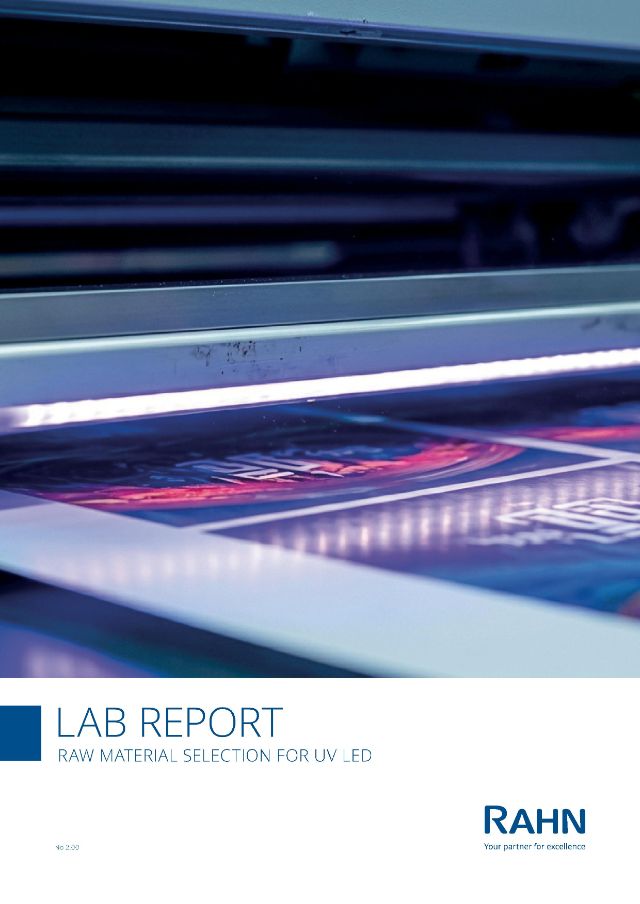
    Our updated lab report, "Raw Material Selection for UV LED Systems", provides practical formulation guidance and benchmark data on the performance of selected photoinitiators, oligomers, and monomers under 395 nm UV LED curing conditions.

    Which Raw Materials Really Work in UV LED Systems? Insights from our Updated Technical Lab Report

    As UV LED technology continues to replace conventional mercury lamp curing, formulators face the challenge of achieving efficient surface and through-cure using light sources with significantly narrower emission spectra.

    Our updated lab report, "Raw Material Selection for UV LED Systems", provides practical formulation guidance and benchmark data on the performance of selected photoinitiators, oligomers, and monomers under 395 nm UV LED curing conditions.

    Key Topics Covered

    • Photoinitiator selection for UV LED wavelengths
    • Influence of oligomers and monomers on cure performance
    • Reactivity and curing efficiency
    • Surface cure and through-cure considerations
    • Practical formulation recommendations

    Key Findings

    • Photoinitiator selection remains critical, with significant differences observed among phosphine oxide, thioxanthone, and sensitized systems.
    • Oligomer structure strongly influences UV LED reactivity, with amine-modified and highly functional oligomers delivering superior cure performance.
    • Higher monomer functionality does not always result in better through-cure, particularly in thicker pigmented films.
    • Increased ethoxylation can enhance UV LED reactivity while maintaining manageable viscosity.
    • Film thickness plays a significant role in determining optimal raw material selection.

    The report is designed to support formulators and product developers working on UV LED inks, coatings, adhesives, overprint varnishes, and additive manufacturing materials. 

    Download the full report from our website and discover how raw material architecture influences reactivity, viscosity, surface cure, and through-cure in modern UV LED formulations.
    ENC_LabReport_UV-LED_raw_material_2026.jpg
  • Frontbild-eProduct-Flash-GBP5_Blog.jpg

    Introducing GENOPOL* BP-5 – High Efficiency Meets Low Migration

    07.08.2026

    GENOPOL* BP-5 is a high-performance polymeric benzophenone photoinitiator developed for UV-curable inks, coatings and varnishes where low migration and low odor are essential.

    Introducing GENOPOL* BP-5 – High Efficiency Meets Low Migration

    GENOPOL* BP-5 is a high-performance polymeric benzophenone photoinitiator developed for UV-curable inks, coatings and varnishes where low migration and low odor are essential. Thanks to its high molecular weight and excellent curing efficiency, it is particularly useful as a replacement for low molecular weight benzophenone types.

    Key Benefits at a Glance

    • High-efficiency polymeric benzophenone photoinitiator
    • Extremely low migration due to high molecular weight (Mw/GPC ~2200) and high purity
    • Low odor
    • Reduced oxygen inhibition

    Bound within cured networks, GENOPOL* BP-5 helps formulators achieve low migration without sacrificing cure speed or efficiency.  

    Application Areas  

    GENOPOL* BP-5 is ideally suited for: 

    • Offset inks and varnishes
    • Flexo inks and varnishes
    • Screen printing inks and varnishes
    • UV coatings and adhesives

    GENOPOL* BP-5 aligns with key industry listings, including Swiss Ordinance, German Printing Ink Ordinance (GIO), EuPIA suitability list and Nestlé Guidance. 

    Ready to explore the benefits of GENOPOL* BP-5?  

    Frontbild-eProduct-Flash-GBP5_Blog.jpg
  • Polyester-Polyether-Acrylates.jpg

    Enhance Your Formulations with Versatile Polyether Acrylates

    07.08.2026

    Many UV/EB applications specifically require low viscosity products that, unlike many reactive diluents, also contribute to overall performance after cure.

    Enhance Your Formulations with Versatile Polyether Acrylates

    Many UV/EB applications specifically require low viscosity products that, unlike many reactive diluents, also contribute to overall performance after cure. When low viscosity can be combined with high cure speeds, particularly under LED curing, as well as good over-all resistance properties, a broad range of formulator needs can be addressed. RAHN’s range of polyether acrylates has proven to be of excellent value in a wide array of applications. 
    Let's highlight GENOMER* 3364, GENOMER* 3365, GENOMER* 3414, GENOMER* 3430, GENOMER* 3457, GENOMER* 3497, and GENOMER* 3498.

    Key Products at a Glance

    • GENOMER* 3364 – High reactivity, low viscosity, good solvent resistance.
    • GENOMER* 3365 – <0,1% TMPTA, high reactivity, low viscosity, good solvent resistance.
    • GENOMER* 3414 – High reactivity, low viscosity, good solvent and scratch resistance, flexibility and adhesion, low Tg.
    • GENOMER* 3430 - High reactivity in LED formulations, good flexibility, low yellowing, good adhesion.
    • GENOMER* 3457 - High reactivity, high hardness, chemical resistance and adhesion.
    • GENOMER* 3497 – High reactivity, low viscosity, good solvent resistance. 
    • GENOMER* 3498 – High reactivity, low viscosity, good solvent resistance, <0.1% TMPTA.

    Why Choose GENOMER* Polyether Acrylates? GENOMER* polyether acrylates are characterized by high reactivity and low viscosity, combined with good solvent, scratch and abrasion resistance, moderate to high hardness, low odor and high gloss.

    Polyester-Polyether-Acrylates.jpg
  • Product-Guide-26-Front-picture.jpg

    Presenting our new Energy Curing Product Guide 2026

    07.08.2026

    Discover the Energy Curing Product Guide 2026, a practical overview of RAHN’s portfolio for UV/EB-curable inks, coatings, adhesives, and advanced applications.

Our range of products is established under the trademarks GENOMER*, GENORAD*, GENOCURE* and GENOPOL* which are widely used industry standards.

Our philosophy

The company’s philosophy is based on a high level of customer support with cutting edge technical data combined with up-to-date health, safety and regulatory information. With laboratories in Switzerland, China and the USA, RAHN has the ability to provide local customized solutions and expertise in various application fields.


Experience

In the product development and product application areas RAHN supports its clients with more than 40 years of experience in radiation curing.

RAHN’s key offerings are

  • Full range of specialized UV/EB curable products
  • Consistent product quality available worldwide
  • High quality and high purity products
  • Customer focused product development
  • Technical consulting and support
  • Specialized application laboratories
  • Health & safety and logistics support
  • Worldwide network of partnerships and international chemical suppliers
  • Industry expertise, dedicated to energy curing
  • First class customer service

Lab Reports

From our lab directly to you: discover our Lab Reports and learn about our lab's development and research results.

  • Frontbild-Web.jpg

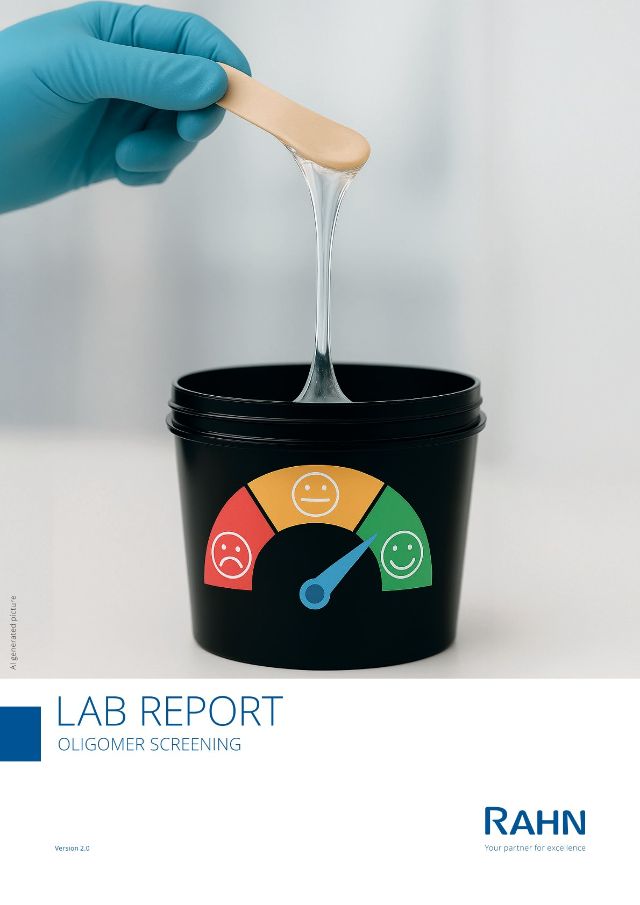
    Oligomer Screening

    17.07.2025

    Lab Report Oligomer Screening
  • Lab-Report-Excimer-formulation-insights.jpg

    Formulation Insights for Excimer Lamp Applications

    22.08.2023

    Lab Report Formulation Insights for Excimer Lamp Applications
  • UV-inkjet_LabReport_23.jpg

    UV Inkjet Inks

    21.02.2020

    Formulating of UV inkjet inks is a difficult challenge to achieve adhesion, flow and printability performance attributes needed.

Events

Save the date! We're looking forward to meeting you at the following events.

  • China Coat

    11.11.2026 - 13.11.2026

    Shanghai, China

    Visit us at booth 1.1G27
  • Formnext Frankfurt

    17.11.2026 - 20.11.2026

    Frankfurt, DE

    More information will follow soon.

Product Flashes

Product overview, mechanical data and more: learn more about our products with our Product Flashes.

Publications

Interested in everything EnergyCuring? Here you can find our publications.
Your personal contact